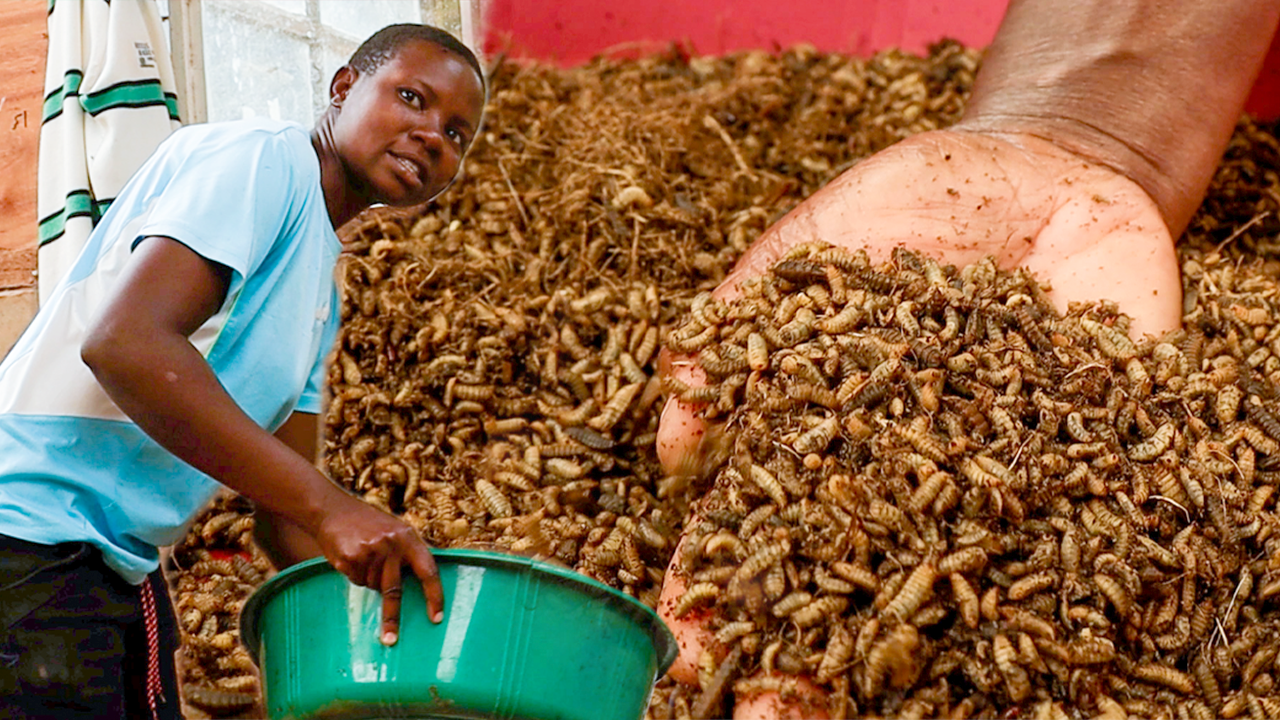
Black Soldier Fly farming in Kenya has been viewed as a game-changer for sustainability in livestock farming. By converting organic waste into high-value protein and fertilizer, BSF farming has provided multiple benefits.
- Affordable livestock feed has been produced in the form of protein-rich larvae, which have been used to feed poultry, pigs, and fish.
- Organic waste reduction has been achieved since food scraps, market waste, and farm residues have been converted into useful products.
- Soil enrichment has been made possible through frass, the by-product of BSF farming, which has been used as organic fertilizer.
Therefore, these benefits have shown that BSF farming is not just profitable but also environmentally friendly and aligned with Kenya’s agribusiness sustainability goals.
Understanding Black Soldier Fly Farming
Black Soldier Fly (Hermetia illucens) is an insect species that has been utilized for its larvae rather than the adult stage. Unlike houseflies, Black Soldier Flies do not transmit diseases, making them safe for farming systems.
In continuation, the life cycle of the Black Soldier Fly has been observed to consist of four stages: egg, larva, pupa, and adult. The larvae stage has been the most economically valuable, as the protein content has been recorded at 40–60%, with additional beneficial fats. These larvae have been harvested and processed into animal feed or sold fresh to farmers.
Setting Up a Black Soldier Fly Farm
Additionally, the process of establishing a BSF farm in Kenya has been simplified to make it accessible to small and medium-scale farmers.
- Infrastructure – Simple rearing units, such as wooden or plastic containers, have been used. Larger farms have invested in specialized BSF houses with climate control.
- Breeding Area – Consequently, a controlled environment with moderate temperatures and humidity has been created for adult flies to mate and lay eggs.
- Larval Rearing Units – Containers filled with organic waste have been used for larvae development.
- Harvesting Units – Larvae have been designed to self-harvest by crawling into collection points when ready for pupation.
This low-cost setup has since made BSF farming one of the most affordable agribusiness opportunities in Kenya.
Organic Waste Utilization
Organic waste from markets, kitchens, farms, and agro-industries has been identified as the main input in BSF farming. Instead of being left to rot or disposed of in landfills, this waste has been fed to BSF larvae.
For every kilogram of waste, up to 200 grams of high-protein larvae have been produced. This conversion efficiency has positioned BSF farming as one of the best solutions for addressing food waste challenges while creating value for farmers.
Harvesting and Processing
Consequently, once the larvae have reached maturity, they have been harvested for use as animal feed. The harvesting process has often been made easier by the self-harvesting behavior of the larvae.
After harvesting, the larvae have been used in several ways:
- Fed directly to poultry, pigs, or fish.
- Dried and processed into BSF meal, which has been used as a substitute for fishmeal and soymeal.
- Processed into oil for animal nutrition or industrial applications.
The frass (waste residue) left after larvae feeding has been collected and used as organic fertilizer, improving soil fertility and crop yields.
Economic Potential of BSF Farming in Kenya
Furthermore, black Soldier Fly farming in Kenya has been recognized for its high profitability. With the cost of commercial feeds rising steadily, BSF meal has been adopted as a cheaper and sustainable alternative.
- Cost reduction has been achieved for livestock farmers who produce their own feed.
- Income generation has been possible for entrepreneurs who sell larvae, BSF meal, or fertilizer.
- Job creation has been stimulated in urban and rural areas through BSF collection, processing, and distribution.
In conclusion, the growing aquaculture, poultry, and piggery sectors in Kenya have created an expanding market for BSF products.
Challenges in Black Soldier Fly Farming
Despite its potential, BSF farming has not been without challenges. The main issues identified include:
- Limited awareness among farmers about BSF farming opportunities.
- High initial costs for setting up large-scale farms with advanced equipment.
- Knowledge gaps in managing breeding, rearing, and harvesting effectively.
- Limited regulatory frameworks on insect-based feed production.
These challenges have highlighted the need for more farmer training, supportive policies, and research investment.
Environmental Benefits of BSF Farming
Beyond economic value, Black Soldier Fly farming in Kenya has also been recognized for its environmental impact.
- Waste management has been improved, reducing the burden on landfills.
- Greenhouse gas emissions from decomposing organic waste have been reduced.
- Sustainable livestock production has been supported by reducing reliance on overfished marine resources used in fishmeal production.
This eco-friendly approach has therefore aligned BSF farming with global trends in circular economy and sustainable agriculture.
Lessons for Successful Black Soldier Fly Farming
Farmers in Kenya who have ventured into BSF farming have identified several lessons for success:
- Quality waste sourcing – Clean and uncontaminated waste must be used to avoid harmful residues in animal feed.
- Proper farm design – Well-ventilated rearing units improve productivity.
- Training and knowledge – Understanding the BSF lifecycle is essential for consistent results.
- Market research – Identifying buyers for larvae, BSF meal, and fertilizer ensures profitability.
- Scaling gradually – Starting small and reinvesting profits has been the most sustainable path for farmers.
The Future of Black Soldier Fly Farming in Kenya
The future of Black Soldier Fly farming in Kenya has been seen as promising. With increased awareness, technological innovation, and government support, the sector is expected to expand rapidly. Integration of BSF farming into livestock production systems has since been predicted to lower feed costs, reduce environmental impact, and increase food security.
Investments in research, training programs, and value chain development will further strengthen the role of BSF farming in Kenya’s agribusiness landscape.
In conclusion, black Soldier Fly farming in Kenya has been proven as a profitable and sustainable solution for livestock feed production and waste management. Through efficient waste conversion, production of protein-rich larvae, and provision of organic fertilizer, BSF farming has offered multiple benefits to farmers, entrepreneurs, and the environment.
At Imagine Business, the commitment remains clear: to highlight innovative agribusiness opportunities such as BSF farming that empower Kenyan farmers to achieve profitability, sustainability, and resilience in the face of modern challenges.